


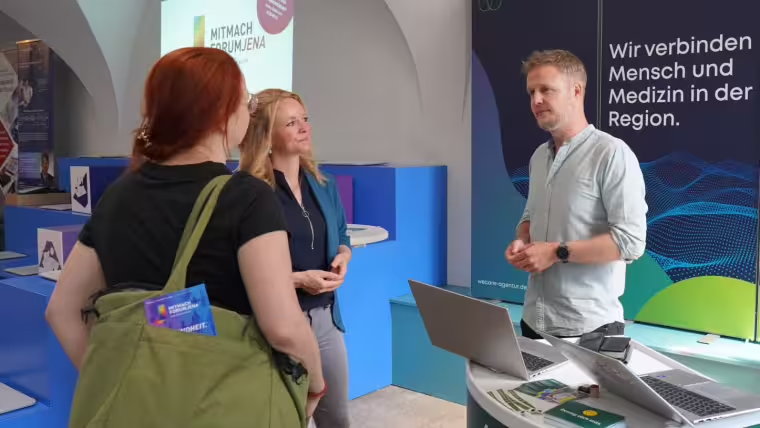
OpenFORUM Networking Event 2026
An open dialogue event for experts from the fields of research, local government, business, culture and active civil society
How can academia, cities, culture, business and society work together more closely? How can mutual exchange be fostered through public engagement, and what projects are already in place?
We warmly invite experts, researchers, specialist planners and anyone interested from the worlds of academia, urban planning, business, culture and active civil society to the second matching event, ‘OpenFORUM x JenaVersum’, on 7 October 2026 at the Rosensäle of Friedrich Schiller University Jena.
This year’s focus is on the themes of new public health and healthy urban development, as well as democracy and social cohesion. Above all, however, the aim is to think ahead together: we want to bring together people and institutions working on similar issues, initiate new project partnerships and develop ideas for joint ventures. We will also be presenting the latest developments regarding the OpenFORUM on Tour.
Take this opportunity to present your current project and find new partners. We look forward to seeing you there!
We kindly ask for registration.
More information about the event is available here. To go directly to the registration page, click here.
WHEN: October 7, 2:00–4:30 p.m.
WHERE: Rosensäle, Fürstengraben 27, 07743 Jena
