


MitmachFORUM: From Minecraft to Public Opinion
Is It All Just a Game? Gaming Streams Between Politics and Entertainment
WENN: April 17, 2026, 9:45 a.m. – 5:30 p.m.
WHERE: StadtLab Jena, Markt 1, 07743 Jena

WENN: April 17, 2026, 9:45 a.m. – 5:30 p.m.
WHERE: StadtLab Jena, Markt 1, 07743 Jena
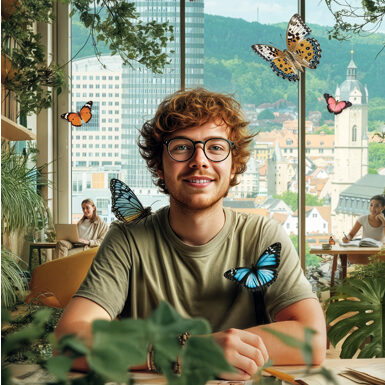
Friedrich Schiller University and Ernst Abbe University of Applied Sciences are jointly inviting prospective students to find out about study opportunities. Whether you are still undecided or already have a specific degree program in mind, you will find all the answers you need at the Open Campus. In addition to presentations on bachelor’s and master’s degree programs and the opportunity to talk to students and faculty, there will be campus and library tours as well as lectures and information stands on applications, financing, housing, and studying abroad.
Further information and the program can be found here for the FSU and here for the EAH.
WHEN: April 25, 2025, 9:30 a.m. – 3 p.m.
WHERE: Carl-Zeiss-Promenade 2 (EAH) and Carl-Zeiss-Straße 3 (FSU)
You need to load content from reCAPTCHA to submit the form. Please note that doing so will share data with third-party providers.
More InformationYou are currently viewing a placeholder content from Turnstile. To access the actual content, click the button below. Please note that doing so will share data with third-party providers.
More InformationYou are currently viewing a placeholder content from Vimeo. To access the actual content, click the button below. Please note that doing so will share data with third-party providers.
More InformationYou are currently viewing a placeholder content from YouTube. To access the actual content, click the button below. Please note that doing so will share data with third-party providers.
More InformationYou need to load content from reCAPTCHA to submit the form. Please note that doing so will share data with third-party providers.
More InformationYou are currently viewing a placeholder content from Facebook. To access the actual content, click the button below. Please note that doing so will share data with third-party providers.
More InformationYou are currently viewing a placeholder content from Instagram. To access the actual content, click the button below. Please note that doing so will share data with third-party providers.
More InformationYou are currently viewing a placeholder content from X. To access the actual content, click the button below. Please note that doing so will share data with third-party providers.
More Information